Meet the Tree: Toothache Tree

Toothache tree, Zanthoxylum clava-herculis, is surely one of Arkansas’ most intriguing native plants.

Ash - Prickly 3

Toothache tree
Photo by Sid Vogelpohl

If you haven’t been introduced, chew on a twig or a piece of bark for a few minutes and feel your mouth and tongue start to tickle and go numb.

(Please be sure that you have correctly identified the tree and you are not in fact chewing on a poison-ivy vine that might be climbing the trunk.)

Ash - Prickly 2

Compound leaves of toothache tree
Photo by Sid Vogelpohl

Toothache tree (tickle tongue or prickly-ash or Hercules’ club) is covered with prickles from the compound leaves to the twigs and bark.

The conical to flattened bark projections are especially interesting, each with prominent layers of cork tipped with a sharp, delicate spine.

Toothache tree occurs in the southwestern half to two-thirds of the state on a variety of upland and poorly drained sites.

It blooms in the spring–pretty, but nothing spectacular. The species is a member of the citrus family, and like our wafer-ash (or hop tree) is a host for giant swallowtail butterfly larvae.

A second species, Z. americanum, is rare in northern Arkansas.

Sugarberry with similar bark architecture

Sugarberry with similar bark architecture
Photo by Martha Bowden

The only other Arkansas trees with similar bark architecture are the sugarberries and hackberries, Celtis species, with amorphous, corky, wart-like protuberances.

Written by Eric Sundell

Terms of Use

Posted in Native Plants, Trees | Tagged , , , , | Leave a comment

Neat Plant Alert: Yellow Trout-Lilies at Bell Slough

BS tl

Yellow trout- lilies at Bell Slough. Picture taken by Sharon Ferguson

Arkansas Native Plant Society (ANPS) loves to get pictures from our members to post.  Please keep sending them in!

This beautiful stand of yellow trout-lilies (Erythronium rostratum) is blooming right now at Bell Slough near Mayflower.

Yellow trout-lilies grow in moist, rich woods on stream and river terraces and shaded slopes throughout the northwestern half of Arkansas.  They often grow in large colonies and generally bloom a couple weeks later than the white trout-lilies.  This particular species of yellow trout-lily holds its flowers more upright rather than nodding like many other species of trout-lilies.  The common name “trout-lily” is likely derived from the mottling of the leaves, in reference to the spotting and mottling of some species of trout.

Terms of use

Posted in Native Plants, Plant Alert, Wildflowers | Tagged , , , , | 1 Comment

Neat Plant Alert: Early to Bloom Plum Ripens in May

Chickasaw plum, Prunus angustifolia, is Arkansas’ most common thicket-forming plum and the earliest to bloom.

Thickets at Holla Bend National Wildlife Refuge, from two to about fifteen feet in height, were so impressively massive, they seemed to monopolize acres of ground.

The species is found throughout the state, favoring sites with plenty of soil moisture.

The small, tasty plums ripen early, in May.

Chickasaw plum

Thicket of plums

Written by Eric Sundell
Pictures by Martha Bowden

Terms of use

Posted in Plant Alert | Tagged , , , , , | Leave a comment

ANPS Field Trip on May 18 to Blackland Prairies

Photo by Joe Nix

Snow-on-the-prairie  Photo by Joe Nix

ar-clarke-and-hempstead-ctyJoin Arkansas Natural Heritage Commission botanist Theo Witsell on a return field trip to explore and inventory two of the state’s highest quality blackland prairie remnants. We will meet at Terre Noire Natural Area near Arkadelphia at 9:30 am. We’ll break for lunch at Arkadelphia, and then head southwest to The Nature Conservancy’s Columbus Prairie Preserve for the afternoon. This will be a spring version of the trip last October. Both of these sites have been painstakingly restored over many years and are home to many rare plant species. Come for one, the other, or both sites. Limit 20 people. Please call Theo at 501.831.7473 or email theo@arkansasheritage.org to reserve a spot and get directions.

Field trips of the Arkansas Native Plant Society are for current and future members. (That’s right: Everyone is welcome!) Botanists from around the state lead these enjoyable and informative walks. If you are planning to attend, please inform the trip leaders in advance so they will know to expect you.  Uncertain of the weather?  Be sure to call the trip leader to confirm.

Become a member of Arkansas Native Plant Society.  Learn how to join here.

Posted in Field Trips | Tagged , , , , | Leave a comment

ANPS Field Trip on May 16 to see the Ouachita Huckleberries

Field trips of the Arkansas Native Plant Society are for current and future members. (That’s right: Everyone is welcome!) Botanists from around the state lead these enjoyable and informative walks. If you are planning to attend, please inform the trip leaders in advance so they will know to expect you.

Uncertain of the weather?  Be sure to call the trip leader to confirm.

Thursday, May 16, 10 a.m. Ouachita Huckleberries. Leader: Susan Hooks (501-282-5365)

Meet at 10 a.m. at Burl’s Smokehouse on U.S. Hwy 270 in Crystal Springs, west of Hot Springs. U.S. Forest Service botanist Susan Hooks will lead us to one of the few known populations of black huckleberry, Gaylussacia baccata, the only true huckleberry in Arkansas. (All the other “huckleberries” are just ordinary blueberries.) We’ll also see Ozark chinquapin and cucumber magnolia (with luck, we’ll catch the cucumber tree in bloom), and a host of spring wildflowers. The trip will be more driving than walking; we’ll carpool at Burl’s and be back there for lunch around 1 p.m. Or bring a sack lunch.

Invitation to new membersJoin Arkansas Native Plant Society

Nothing to do this spring?   Check out the calendar and join us for a hike.

Posted in Field Trips | Tagged , , , , | Leave a comment

ANPS Field Trip on May 22 to Petit Jean Mountain State Park

Field trips of the Arkansas Native Plant Society are for current and future members. (That’s right: Everyone is welcome!) Botanists from around the state lead these enjoyable and informative walks. If you are planning to attend, please inform the trip leaders in advance so they will know to expect you.

Uncertain of the weather?  Be sure to call the trip leader to confirm.

Wednesday, May 22, 10 a.m. Petit Jean Mountain State Park. Leader: Betty Owen (501-472-6920)

Meet at 10 at Mather Lodge, Petit Jean State Park, for a 2-3 hour walk on the Canyon Trail (easy to moderate). The walk will follow Cedar Creek’s many small falls and deep pools.  We’ll see spring wildflowers at their peak and Petit Jean’s gorgeous scenery. Lunch back at the lodge around 1 p.m. or bring trail food. Or both.

Invitation to new membersJoin Arkansas Native Plant Society

Many more field trips are offered by Arkansas Native Plant Society this spring.  The calendar  has a listing of them.  Please join us.

Posted in Field Trips | Tagged , , , | Leave a comment

ANPS Field Trip on May 11 to Dripping Springs in Hot Springs

Field trips of the Arkansas Native Plant Society are for current and future members. (That’s right: Everyone is welcome!) Botanists from around the state lead these enjoyable and informative walks.  Be sure to contact the trip leader so they will know to expect you.

Uncertain of the weather? Call the trip leaders to confirm.

Saturday, May 11, 10 a.m. Dripping Springs in Hot Springs. Leaders: John Simpson (501-276-3204) & Eric Sundell (870-723-1089).

Join two of the Ouachita Mountain Boys for an easy 2 hour walk (round trip) to one of Arkansas’ loveliest mossy rocks, with an abundance of wildflowers along the way. Featherfoil or water-violet, Hottonia inflata, is an uncommon floating aquatic that occurs in the area.

From the landmark Arlington Hotel on Central Avenue travel north for several blocks to turn left (west) around the fountain onto Whittington Ave and then immediately turn right (north) onto Cedar Glades. Travel 1.6 miles to turn right (north) onto Wildcat Road (at sign for Cedar Glades Park). Then travel 2.5 miles crossing one-lane bridge to trail-head at barrier gate. 10 a.m. John’s cell: 501-276-3204, if you lose the way.

Invitation to new membersJoin Arkansas Native Plant Society
More field trips on our calendar.  Please join us.


Posted in Field Trips | Tagged , , | Leave a comment

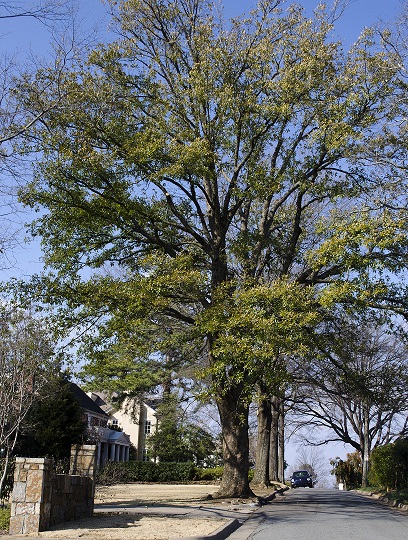
Neat Plant Alert: Compton Oak

Arkansas tree lovers will be interested to hear about an unusual hybrid oak that can be seen in all its tardily deciduous glory (it looks rather evergreen ) in the Heights neighborhood of Little Rock.

ComptonOakER

Picture by Ellen Repar

Like most genera with a large number of species, the oaks (Quercus spp.) are often tricky to identify, in part because they are promiscuous, hybridizing with any number of closely related species. (For example, in the Manual of the Vascular Flora of the Carolinas, black oak and southern red oak are each recorded as hybridizing with no less than eight other oak species.)

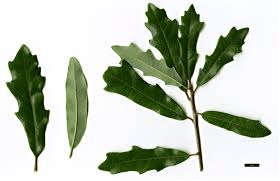
compton oakCompton oak is the result of a union between overcup oak and live oak, the spawn of Q. lyrata x virginiana. The bicolored leaves suggest overcup oak, while the semi-evergeen habit reflects the live oak parentage. It is a naturally occurring hybrid, recorded on the USDA Plants database from seven southeastern states of the Gulf and Atlantic Coastal Plains, from Texas to Virginia, where both parents occur naturally. Dale Thomas, in his atlas of the vascular plants of Louisiana, records Compton oak as a spontaneous element of the flora from eleven parishes. However, in Arkansas, only one of the two parents, overcup oak, is native. Live oak will grow respectably in central and southern Arkansas as a horticultural specimen and apparently, on rare occasion, will jump the fence—it is listed in the Checklist of the Vascular Plants of Arkansas. So how did such a fine Compton oak get itself to Country Club Lane in Little Rock? A horticultural provenance. Compton oak was introduced into cultivation in 1920, and our tree was no doubt planted at this Little Rock site decades ago.

To see the tree, follow country Club Boulevard east till it dead ends at the gate of the Little Rock Country Club. There, turn left onto Country Club Lane. The Compton oak is on the left, about 2-3 houses down the block, a grand, interesting, and evergreen tree. Thanks to Bill Shepherd for alerting us to it.

Written by Eric Sundell

Terms of Use

Posted in Plant Alert | Tagged , , , , , | Leave a comment

ANPS Field Trip on April 14 to Cossatot River State Park

Field trips of the Arkansas Native Plant Society are for current and future members. (That’s right: Everyone is welcome!) Botanists from around the state lead these enjoyable and informative walks.  Uncertain of the weather?  Call the trip leader.

Sunday, April 14, 12 noon (or 11 a.m.). Cossatot River State Park. Leader: Brent Baker.

Join Arkansas Natural Heritage Commission botanist Brent Baker for a nature walk on Harris Creek Trail at Cossatot River State Park-Natural Area.  If you eat lunch on the way, meet at the Visitor Center at 12 pm.  Or if you want to bring a sack lunch, you can arrive at 11 am and eat with Brent at the Visitor Center and then take a quick stroll on the Waterleaf Interpretive Trail.  The Visitor Center is on south side of US Hwy 278, a little over 9 miles east of junction with US Hwy 71 in Wickes, south of Mena and north of DeQueen.  If coming from Little Rock, take US Hwy 70 west out of Hot Springs to Salem, just past Glenwood, and then take AR Hwy 84 west to junction with US Hwy 278 at Umpire.  From there it’ll be a little over 8 miles west on Hwy 278 to the Visitor Center.  Allow for a good 3-hour drive from Little Rock.  After meeting at the Visitor Center, we’ll then drive the 1.3 mile to the trailhead.

Harris Creek Trail begins in a shale glade just above Baker Creek. (The creek and the now defunct Baker Springs community just upstream are actually named after Brent’s ancestors who settled here in the mid-1800’s!)  After exploring the spring wildflowers of the shale glade, the trail meanders through various dry to moist mixed pine, hardwood, and cedar woodlands with a high diversity of plants, including several rare plants.  Highlights will include chalk maple, Ouachita twistflower, Waterfall’s sedge, Palmer’s cornsalad, and probably several others.  There are numerous overlooks with beautiful views of Baker Creek, Harris Creek, and the Cossatot River.  The trail is 3.5 miles long and moderately difficult in short stretches.  It’ll probably take us about 4 hours to hike the entire loop.  Wear good shoes, bring lots of water, and perhaps a light snack.  Folks who are headed back to Little Rock, if interested, can stop and eat dinner in Glenwood with Brent who will be staying there overnight.

Please let Brent know you will be attending by Friday, April 12th so he will be expecting you.  Also, provide him with a phone number so he can contact you in case of weather cancellation.  Email Brent at brent@arkansasheritage.org or call 479.970.9143.  To find out more information about Cossatot River State Park-Natural Area, visit the Arkansas State Parks website (http://www.arkansasstateparks.com/cossatotriver/) or the Arkansas Natural Heritage Commission website (http://www.naturalheritage.com/natural-area/cossatot-river-state-park-natural-area/).

Invitation to new membersJoin Arkansas Native Plant Society

Posted in Field Trips | Tagged , , , | Leave a comment

Explore the Glade Habitat of the Buffalo River

Theo Witsell, Arkansas Natural Heritage Commission, asked us to share this.  We said, “Of course!”  Enjoy the video!

The National Park Service has released a video about the restoration of glade habitat along the Buffalo River which was produced by Terra Fondriest at the Buffalo National River in Arkansas.  The video features the work of the Arkansas Natural Heritage Commission (ANHC) monitoring glade restoration efforts at the Gene Rush Wildlife Management Area adjacent to the Buffalo River.  This work is part of a cooperative State Wildlife Grant between the Arkansas Game and Fish Commission, the National Park Service, and the ANHC to restore degraded (cedar-encroached) glades and improve habitat for a variety of plants and animals.  Here is the write-up and link to the video on YouTube:

Glades of the Buffalo National River

Explore the unique glade habitat on the Buffalo National River in Arkansas. Learn about the current restoration and management practices the Park is implementing in order to preserve the rare plants and animals that call these glades home. Take a helicopter ride down the Buffalo, see prescribed wildfires that are essential to the health of glade communities, listen to the beautiful bird songs of the glades, hear the interviews of area experts, and enjoy the regional music of the group Harmony.

Click to view video: Glades of the Buffalo National River – produced by Terra Fondriest

Terms of Use

Posted in Education | Tagged , , , | Leave a comment