Know Your Natives – Grape Ferns

Grape ferns, succulent ferns in the Ophioglossaceae (Adder’s-tongue Family), are named for their round, clustered sporangia (spore cases), which resemble a bunch of grapes.  These ferns are smooth, without scales of any kind, and have soft fleshy stems and roots.  The leaves (fronds) are generally triangular.  The roots, two to three inches below the soil surface, spread radially from a short underground vertical stem or rhizome.  Grape ferns are solitary, having a single stipe (petiole) on infertile fronds and a divided stipe on fertile fronds that supports a dissected vegetative blade and a branched cluster of spore cases (sporangia).  Grape ferns prefer rich, moist shady areas with good drainage.

Young fronds come out of the soil in a bent form with pinnae (leaflets) unfolding laterally as the frond becomes erect (other ferns’ leaves begin as fiddleheads).  The sporangia split when ripe to disperse spores into the air.  Once ripened, the fertile portion quickly withers.

A spore germinates to produce a new plant called a gametophyte (the so-called sexual phase of fern life).  This underground tuberous plant contains no chlorophyll and depends on a fungus for nourishment (a mycorrhizal association).  Gametophytes may exist underground for eight years before producing sperm and egg that lead to rhizomes and above ground fronds.

Cutleaf Grape Fern

Cutleaf grape fern (Botrychium dissectum) grows up to 15 inches tall (see photo 1) and occurs in the eastern United States and eastern Canada.  Leaf margins may be serrated and lacy (forma dissectum) or smooth (forma obliquum).

Cutleaf grape fern (Botrychium dissectum)

Photo 1

Plants  of cutleaf grape fern appear in late summer to early fall, producing a single frond consisting of vegetative and fertile portions joining at or below ground surface.  The vegetative portion is fleshy and semi-leathery and often parallel to the ground.  The fertile portion of mature plants stands upright (see photo 2) above the vegetative section.

Cutleaf grape fern (Botrychium dissectum)

Photo 2

New vegetative fronds have a fresh green appearance in the early fall, darkening to a bronze-green color after frost; a distinct characteristic of this plant (see photo 3).

Cutleaf grape fern (Botrychium dissectum)

Photo 3

Fronds of cutleaf grape fern persist through the winter and into early summer, despite the fertile portion having withered in the fall.  The vegetative portion of the frond may persist until the next year’s growth appears.

Rattlesnake Fern

Rattlesnake fern (Botrychium virginianum) (see photo 4), a type of grape fern, is so called either because its sporangia resemble snake rattles or because the plant’s habitat can also be rattlesnake habitat.  It is a wide-ranging plant found in most of the United States and other parts of the world, such as Mexico, Australia, parts of Asia and Norway. 

Rattlesnake fern (Botrychium virginianum)

Photo 4

This species shows new growth in late spring with the fertile portion of the frond developing before the vegetative portion has fully unfolded.  The plant is generally less than a foot tall.  The vegetative part tends to be horizontal to the ground and light to medium green, with the base varying to pink. Pinnae (leaflets) are variable from plant to plant but generally are very dissected and give the frond a delicate, lacy appearance.  The stalk of the sporangium-bearing portion grows from a juncture above the stipe.  An additional fertile stalk may form on a plant that is without a vegetative portion.

Distinguishing Cutleaf Grape Fern and Rattlesnake Fern

Both ferns grow in similar habitats and have a similar appearance.  However, the growth period can be used to distinguish between them.  Additionally, rattlesnake fern has a thin-textured, non-leathery leaf as compared to the more leathery leaf of cutleaf grape fern. 

Article and pictures by Arkansas Native Plant Society member Sid Vogelpohl with edits by the Arkansas Native Plant Society editorial volunteers.

Terms of Use

Posted in Ferns, Know Your Natives, Native Plants | Tagged , , , , , , , | 1 Comment

Field Trip Exploring the Capitol Campus

On a crisp sunny fall morning seven hearty souls gathered on the Capitol steps to begin a most interesting tour, an Arkansas Native Plant Society  (ANPS) field trip, of the trees adorning the campus of the State Capitol grounds. Our leader, former ANPS President Eric Sundell, led us in a clockwise direction, with the handy brochure “A Walk On The Hill” in hand; it is itself a self-guided tour of the grounds, documented by Steve Burgess, a former student of Eric’s who had done brilliant work, Eric said.

SONY DSCAs we stood admiring the beauty of the campus, and the efforts already made by generations past to provide us the variety and diversity of trees, we also wondered why the flags were flying at half-mast—still an unsolved mystery.

We identified more than 30 of the 40 plus trees listed in the brochure. Eric’s enthusiasm for the native trees of Arkansas represented here was contagious. I loved all the additional information provided from his prodigious store of knowledge.  The Japanese magnolia (Magnolia soulangeana) was the first encounter. One of the trees along the row demonstrated Eric’s explanation of its confused hormonal signals and was showing its blooms in the fall.

Then, we passed the huge willow oak, native to Arkansas, the Shumard oak, and the southern magnolia; the tulip tree, Liriodendron tulipifera—one of only two species of tulip tree worldwide, the other in China—common in the Southeast but, as a native in Arkansas, occurring only on Crowley’s Ridge; and the pines, the slash pine and the loblolly pine.

We were on our way to the Kentucky coffee trees at the rotunda, and next to the busy Iris Society people who were digging up irises.  Eric pointed out the male and female trees, and told tales of how an ANPS member grew her own Kentucky coffee tree from one of the seeds from this site.

The many oaks were viewed: bur oak, post oak, water oak (look up at the crown to spot the identifying leaves), the cherrybark oak, and the sawtooth oak, among others.

Our Arkansas native basswood and the native red mulberry were on our path. But perhaps the most important trees to view were the ginkgo and the dawn redwood (Metasequoia) for their age and novelty; and maybe the two tiny baby kittens hidden in the hollow trunk of the red mulberry!

I think we had a sense of satisfaction with the harmonious tree-bedecked pathways, and the beautiful fall morning, and I certainly appreciated all the information about God’s wonders, the trees, imparted by our leader Eric Sundell.

Arkansas State Capitol Grounds Field Trip Saturday, October 26, 2013
Article by ANPS member Judy Hunt

Webmaster Notes:
Flag mystery solved:  Ex-House Speaker Tom Foley dies at 84
Kittens were not to be found  by the Capitol groundskeepers the next week.

Terms of Use

Posted in Field Trips, Native Plants, Trees | Tagged , | Leave a comment

Field trip to Livingston Creek and Hog Hollow

On Saturday, October 12, Arkansas Native Plant Society (ANPS) members visited two sites in the Ozark National Forest just north of Mountain View.

Large-leaf grass-of-Parnassus (Parnassia grandifolia) is not a grass at all, but a beautiful flowering plant (and also the title of a book of poetry by Andrew Lang). The flowers have five white petals with striking green venation.

Large-leaf grass-of-Parnassus (Parnassia grandifolia) is not a grass at all, but a beautiful flowering plant (and also the title of a book of poetry by Andrew Lang). The flowers have five white petals with striking green venation.

The sites were only a few miles apart, one next to Livingston Creek and the other at Hog Hollow.  The woods, consisting of mature mixed hardwoods and pines, were fresh after an early morning thunder shower.

Chasing after native plants can be hard on your running gear!  ANPS President Betty Owen and member Susan Toone cool their feet in the refreshing waters of Bear Branch.

Chasing after native plants can be hard on your running gear! ANPS President Betty Owen and member Susan Toone cool their feet in the refreshing waters of Bear Branch.

Group leaders Linda Boulton, Dwan Garrison and Ellen Chagnon,  supported by an abundance of top-notch botanists, ensured that no plant of interest was overlooked (see below for a detailed plant list).

A nodding wild onion (Allium cernuum) in beautiful full bloom.

A fall glade onion (Allium stellatum) in beautiful full bloom.

The first hike followed an old logging trail next to Livingston Creek.   Plants in flower included beautiful grass-of-Parnassus along the edges of the creek,  wreath goldenrod, rosinweed, white snakeroot, hawkweed, sweet everlasting, and Appalachian blazing star.  The fruit of American beautyberry  and strawberry bush along the trail were at their gorgeous peak.   Also of special interest were Carolina holly, a deciduous holly that is similar to but much less common than possumhaw, and a fine specimen of Dutchman’s pipe vine.

Botanist extraordinaire Brent Baker carefully examines a frostweed (Verbesina virginica).

Botanist extraordinaire Brent Baker (Arkansas Natural Heritage Commission)  carefully examines a starry rosinweed (Silphium asteriscus).

The second hike was just a few miles up the road in Hog Hollow.  The group had barely gotten out of the parking lot when the “find” of the day was spotted – an impressively large group of Indian pipes, a fascinating and unique plant that lacks chlorophyll (link to ANPS article called Know Your Natives – Indian Pipe).  Sid Vogelpohl informed the group that Indian pipe has a delicate sweet fragrance.  Each person took a turn sniffing the Indian pipe plants.  Although some group members appeared  a little wobbly afterward, there is no direct evidence that anyone got high from this experience.

Several new plants were observed along the wood road leading to Bear Branch, including a fall glade onion in beautiful full bloom, wild yam vine with mature seed pods and lead plant, as well as blue lobelia and sneezeweed in bloom.

The ANPS thanks Dwan Garrison and Ellen Chagnon, Arkansas Master Naturalists who live in the Mountain View area, for doing an excellent job of scouting the area and selecting sites with many interesting native plants.

Thanks also to naturalist Linda Boulton for leading Saturday’s trips as well as the Gunner Pool walk on Sunday.

Article and pictures by ANPS vice president Michael Weatherford.

Terms of Use

Great blue lobelias (Lobelia siphilitica) brightened the banks along Bear Branch.

Great blue lobelias (Lobelia siphilitica) brightened the banks along Bear Branch.

Anglepod milkvine (Matelea gonocarpos) might look like Dutchman’s pipe vine at first glance, but its large angular seed pod is quite distinctive.

Anglepod milkvine (Matelea gonocarpos) might look like Dutchman’s pipe vine at first glance, but its large angular seed pod is quite distinctive.

Carolina holly (Ilex ambigua) is deciduous like its close relative possumhaw (Ilex decidua) but not as widely distributed.  It is distinguished from possumhaw primarily by its leaves which tend to be widest near the middle with broadly wedge-shaped bases.  Possumhaw leaves tend to be widest above the middle with narrowly wedge-shaped bases.

Carolina holly (Ilex ambigua) is deciduous like its close relative possumhaw (Ilex decidua) but not as widely distributed. It is distinguished from possumhaw primarily by its leaves which tend to be widest near the middle with broadly wedge-shaped bases. Possumhaw leaves tend to be widest above the middle with narrowly wedge-shaped bases.

Plant List:

  1. large-leaf grass-of-Parnassus (Parnassia grandifolia )
  2. wreath goldenrod (Solidago caesia)
  3. Carolina holly (Ilex ambigua)
  4. strawberry-bush (Euonymus americanus)
  5. climbing milkweed (Matelea decipiens)
  6. roughleaf goldenrod (Solidago rugosa)
  7. virginia copperleaf (Acalypha virginica)
  8. anglepod milkvine (Matelea gonocarpos)
  9. starry rosinweed (Silphium asteriscus)
  10. Carolina buckthorn (Frangula caroliniana)
  11. spicebush (Lindera benzoin)
  12. frostweed (Verbesina virginica)
  13. river-oats (Chasmanthium latifolium)
  14. white snakeroot (Ageratina altissima)
  15. bear’s-foot (Smallanthus uvedalius)
  16. sweet everlasting (Pseudognaphalium obtusifolium)
  17. southern blazing star (Liatris squarrulosa)
  18. silky dogwood (Cornus obliqua)
  19. Dutchman’s pipe (Aristolochia tomentosa)
  20. glade wild onion  (Allium stellatum)
  21. Indian-pipe (Monotropa uniflora)
  22. wild yam (Dioscorea villosa)
  23. coral-berry (Symphoricarpos orbiculatus)
  24. hawkweed (Hieracium gronovii)
  25. Carolina snailseed  (Cocculus carolinus)
  26. thimbleweed (Anemone virginiana var. virginiana)
  27. great blue lobelia (Lobelia siphilitica)
  28. sneezeweed (Helenium autumnale)
  29. Carolina elephant’s-foot (Elephantopus carolinianus)
  30. hairy elephant’s-foot (Elephantopus tomentosus)
  31. ironwood (Carpinus caroliniana)
  32. hop-hornbeam (Ostrya virginiana)
  33. buttonbush (Cephalanthus occidentalis)
  34. virgin’s-bower (Clematis catesbyana)
  35. pink thoroughwort (Fleischmannia incarnata)
  36. purple-stem cliff-brake (Pellaea atropurpurea)
  37. blue ash (Fraxinus quadrangulata)
  38. dwarf crested iris (Iris cristata)
  39. jumpseed (Persicaria virginiana)
  40. pale Indian-plantain (Arnoglossum atriplicifolium)
  41. Japanese stilt-grass (Microstegium vimineum) – invasive species
  42. beefsteak plant (Perilla frutescens) – invasive species
  43. monkey-flower (Mimulus alatus)
  44. Boott’s goldenrod (Solidago arguta ssp. caroliniana var. bootii)
  45. leatherwood (Dirca palustris)
  46. rattlesnake fern (Botrychium virginianum)
  47. lousewort (Pedicularis canadensis)
  48. false nettle (Boehmeria cylindrica)
  49. white vervain (Verbena urticifolia)
  50. whorled milkweed (Asclepias verticillata)
  51. Grancy gray-beard (Chionanthus virginicus)
  52. American beak grass (Diarrhena americana)
  53. low-bush blueberry (Vaccinium pallidum)
  54. ticktrefoil/beggar lice (Desmodium sp.)              
  55. Mexican plum (Prunus mexicana)
  56. Arkansas ironweed (Vernonia arkansana)
  57. rusty blackhaw (Viburnum rufidulum)
  58. yellow passionflower (Passiflora lutea)
  59. supplejack vine (Berchemia scandens)
Posted in Field Trips | Tagged , , , , , | Leave a comment

Know Your Natives- Indian Pipe

Indian Pipe (aka Ghost Plant and Corpse Plant) (Monotropa uniflora) is a herbaceous plant that occurs across most of North America and even in Asia.  Although widespread, it is generally scarce or rare in occurrence.  It belongs to its own family, Monotropaceae.  The scientific name translates to “once-turned single flower”.

Indian Pipe only emerges above ground when flowering, sending up several to as many as 20 or more waxy white unbranched stalks (see photo below).

Indian Pipe - Monotropa unifloraThe fragile stalks terminate in drooping bell-shaped flowers, usually white, but sometimes pink or even red.  Vestigial leaves called bracts cover the stem like scales. Flowers have either four or five petals, one central pistil and from 10 to 12 stamens.  Flower size ranges from 1/2 to 1 inch in length, and the height of the plant varies from 3 to 9 inches. As the fruit capsules ripen, flowers point straight up for more effective seed dispersal (see photo below), and the entire above-ground part of the plant darkens to a deep brown.

Indian Pipe - Monotropa uniflora  Dried plants can be seen in the forest even into the next spring (see photo below).

Indian Pipe - Monotropa unifloraWithout any chlorophyll and no need for sunlight, plants occur in the cool and moist environment of a dense forest wherein a rich soil has developed from decaying plant material.  (Such soil being ideal for fungus.)  Experiments with radioactive carbon and phosphorus injected into trees have proven that Indian Pipe takes food indirectly from living trees using a fungus, such as Russula (a gilled mushroom), as an intermediary.  The fungus, in a symbiotic relationship with a wide variety of trees, including oak, beech and pine, collects food from tree roots in exchange for mineral nutrients. The Indian Pipe’s roots chemically mimic the tree’s root system causing the root-like threads of the fungus’s mycelia to attach to the Indian Pipe.  The Indian Pipe takes a portion of the fungus’s food for itself.  Indian Pipe does not benefit fungus or tree.  Plants such a Indian Pipe are called epiparasites.

Little is known about the pollination of Indian Pipe, but bees and skipper butterflies have been observed to visit them. The ovary develops into a woody capsule with slits through which the tiny seeds pass.  Seeds are like powder and disperse by wind.  Germination occurs only when the seed has been attached by the fungal mycelia.

Article and photos by Sid Vogelpohl

Terms of Use

Posted in Know Your Natives, Native Plants, White, Wildflowers | Tagged , , , , | 1 Comment

Know Your Natives – Basketflower

Centaurea americana is a lovely annual wildflower which really attracts butterflies, bees and other flying critters.

Centaurea americanaThe common name is Basketflower, because of the phyllaries (modified leaves) that surround the flower head base.

Centaurea americana - BasketflowerBasketflower grows from 24 inches to 60 inches and reseeds readily.

Photos and article by ANPS member MaryAnn King.

Terms of Use

Posted in Know Your Natives, Native Plants, Purple, Wildflowers | Tagged , , , , , , | Leave a comment

Visionary Arkansan Alert!

Theo

Former Claytonia editor and longtime Arkansas Native Plant Society stalwart Theo Witsell is featured in this week’s Arkansas Times (Sept. 12th) as one of 25 “Visionary Arkansans.” Here is a link to the Times website. 

Posted in Volunteers | Tagged , | Leave a comment

Transformation: Lawn to Meadow

If you have just finished mowing your lawn for what seems like the 800th time and are thinking there must be a better way, I have news for you.  There is a better way.   Check out the book Urban and Suburban Meadows – Bringing Meadowscaping to Big and Small Spaces by Catherine Zimmerman to learn about the advantages of converting part or all of your lawn to a native plant meadow.    The book provides instructions for site preparation, meadow design and maintenance of your meadow.  There are also sections that include plant lists by region and plant zone, resource contact information, and much more.  Once your meadow is established, it will require only a minimal amount of mowing and you will not need to water, rake or apply pesticides or fertilizer.

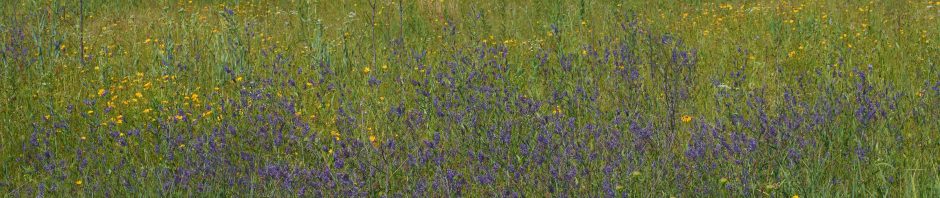
meadowWhen we moved to our place in Southern Arkansas in 2005, it included over four acres of lawn and pasture that had been maintained by mowing.  We immediately developed and began implementing a plan for reducing the mowed area by creating wildflower/native plant meadows.  We now mow about a half-acre (and we’re still converting!).  The transformation of our place has been amazing to us.  Our former “green desert” now supports a diversity of wildflowers, birds and butterflies.  Instead of spending our time mowing, we have plenty of time to enjoy the trails that meander through the meadow.

Many of us have been raised to love manicured, chemically-induced lawns (there are more than 20 million acres in the U.S.) and a native plant meadow might not be for you.  However, we encourage you to check out the alternative.  Urban and Suburban Meadows  by Catherine Zimmerman is a great resource for doing just that.

Article and picture by:  Nancy and Mike Weatherford, ANPS members

Book resources page, click HERE

Terms of Use

Posted in Book Review | Tagged , , | Leave a comment

Neat Plant Alert: Blue Waterleaf, Hydrolea ovata

What a beauty blue waterleaf is!

Blue WaterleafIt’s a thorny wetlander in full bloom now–or even a little past–in the shallow water of swamps, ponds, and ditches. A mass of plants in a road ditch can be bright blue enough to turn heads in passing cars doing 60. The species is common in south Arkansas and in the Arkansas River valley.

Picture by Mike Weatherford
Article by Eric Sundell
Taken at Warren and Kingsland prairies, AR

Terms of Use

Posted in Native Plants, Plant Alert, Wildflowers | Tagged , , , | Leave a comment

Winter Tree Identification: Two Trips or Mini-Workshops

Field trips and Mini-Workshops of the Arkansas Native Plant Society are for current and future members. (That’s right: Everyone is welcome!)  Botanists from around the state lead these enjoyable and informative walks.  Please let trip leaders know you are coming in case of last minute changes.  Be sure to call them if the weather is uncertain.

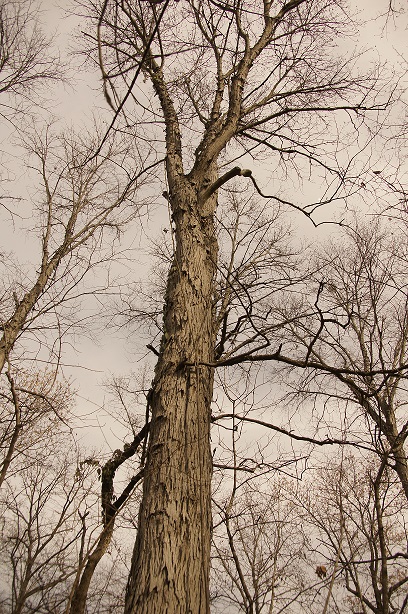
winter treeSaturday, January 18, 2014.  1 p.m.  Winter Tree Identification for Beginners.  Rebsamen Municipal Golf Course, Little Rock.  Leader: Eric Sundell (870-723-1089).

Instead of leaves and flowers, we’ll use the characters of twigs, buds, and scars to identify trees in winter condition.  Ulterior motive: Eric would like help field testing the new Key to Trees in Winter that will be included in the Arkansas Forestry Commission’s forthcoming edition of their handbook, Dwight Moore’s Trees of Arkansas. Meet at the golf course Pro Shop off Rebsamen Park Road at 1 p.m. If you plan to attend, please contact Eric at esundell42@gmail.com for more information, directions, and to receive a digital copy of “Key to Trees in Winter.” Call if the weather looks questionable.

Saturday, January 25, 2014.  1 p.m.  More Winter Tree Identification for Beginners.  Allsop Park Pavilion, Little Rock.  Leader: Eric Sundell (870-723-1089).

We’ll try the new key and our ID skills on different trees, so feel free to attend one or both Winter Tree ID sessions. The Allsop Park pavilion is in the recreation area off Cedar Hill Road just north of the red light/junction with Cantrell Road. If you did not attend the first week, be sure to email Eric for a digital copy of the “Key to Trees in Winter.”

Become a member.  How to Join, click HERE

Terms of Use

Posted in Field Trips, Workshops | Tagged , , | Leave a comment

Field Trip at the Arkansas State Capitol on October 26

Field trips of the Arkansas Native Plant Society are for current and future members. (That’s right: Everyone is welcome!)  Botanists from around the state lead these enjoyable and informative walks.  Please let trip leaders know you are coming in case of last minute changes.  Be sure to call them if the weather is uncertain.

Saturday, October 26, 2013. 10 a.m. on the Capitol steps
Arkansas State Capitol Grounds, Little Rock.

Leader: Eric Sundell  (870-723-1089).

Join us for a tour of the majestic trees of the Capitol grounds, including ginkgo (possibly in fall splendor), a near-champion red mulberry, and a ring of Kentucky coffee trees, two of which should be bearing fruit with fertile seeds.  Meet on the Capitol steps at 10 a.m.

Kentucky Cofee TreeSee also Neat Plant Alert:  Kentucky Coffee Tree

Join ANPS for their Fall Meeting at the Ozark Folk Center. Everyone Welcome!  For more info, click HERE

Become a member.  How to Join, click HERE

Terms of Use

Posted in Field Trips | Tagged , | Leave a comment